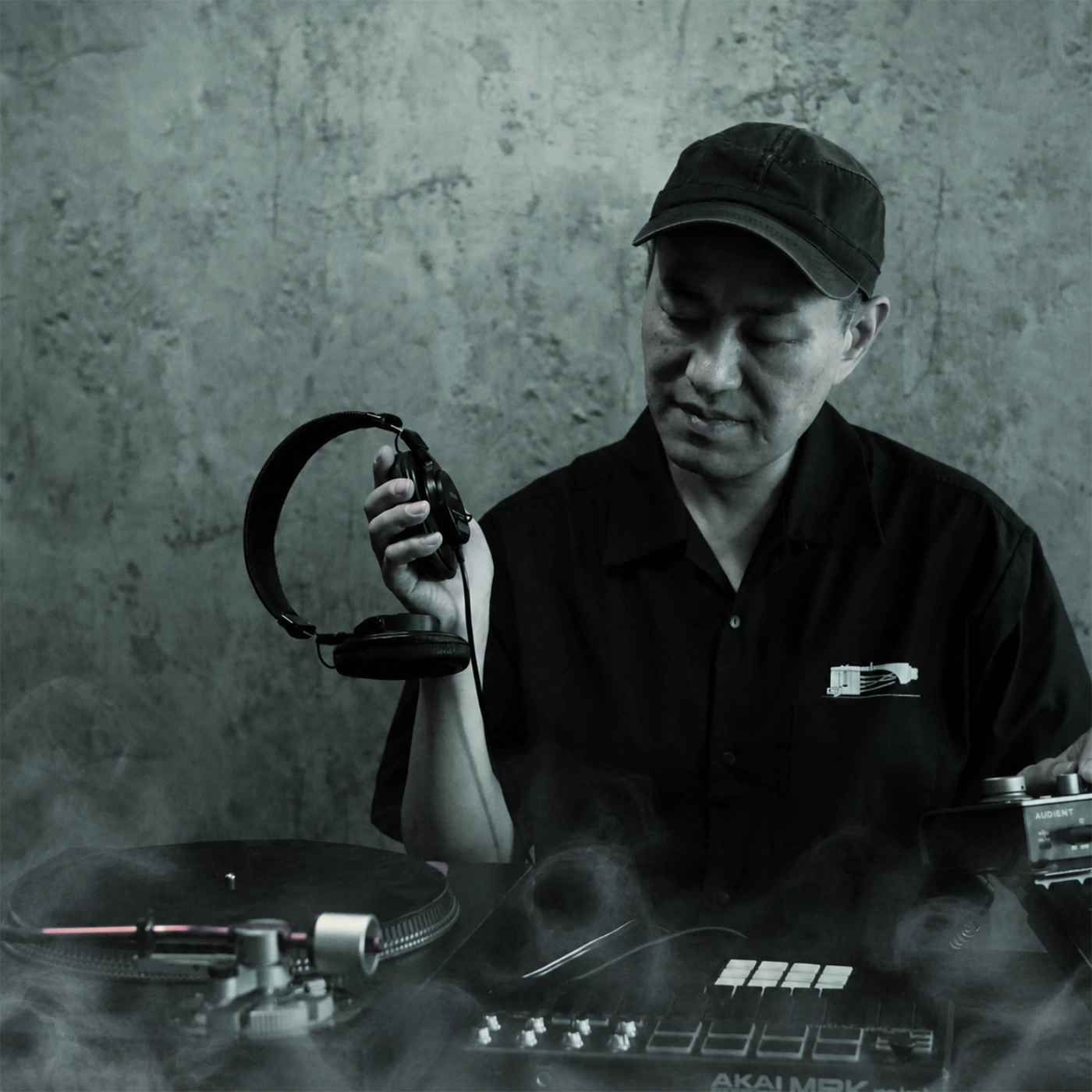
ABOUT / TETSUEI IIZUKA
The maker.
The making.
An independent brand rooted in club music, with every piece conceived, made, and sold by Tetsuei Iizuka. I have been running it since 2003.
Making and Selling for Myself
After graduating from university, I joined a bottling company that manufactured and sold Pepsi-Cola and other soft drinks in Nagano and Niigata. I worked in sales, moving between several locations in Nagano.
Later, as Pepsi’s sales operations in Japan moved to Suntory, the company I worked for became a sales company. I was seconded to an affiliated company in Suntory’s food division for two years.
I suddenly felt that I had become part of a much larger organization. Working on the sales side alone made me think about the relationship between making and selling. Perhaps making products myself and selling them myself was important to earning a profit. I think that was the vague idea beginning to take shape.
What could I do on my own?
Wood, metal, fabric. I started with materials. I wanted something I could work with in a small space, whose value I could see in the material itself. That was how leather came to mind. I knew nothing about it, but to me it felt like a material with a sense of quality.
If I changed careers, I wanted my next occupation to be something I could continue for the rest of my life. With that in mind, I began learning about leather.
People sometimes assume that my work grew out of a leathercraft hobby. Some people do follow that path. In my case, I chose leather while looking for a lifelong occupation. Learning about it and making things with it both began there.
My First Blue Bracelet
When I thought of leather goods, shoes, bags, and accessories came to mind. My sales work took me to hospitals and other medical facilities, so my first idea was to make custom nursing shoes.
One day, while moving slowly through traffic, I noticed a leather supplier. I visited on a day off and spoke with the owner. He explained that footwear involved changing fashions and required many different lasts, making it difficult for an individual to start a business. He suggested that I look at leather more broadly. I bought a beginner’s tool set there.
Normally, I suppose I would have followed the instructional materials and learned the basics. Instead, I immediately started making a bracelet of my own design. It was a wide bracelet made from a vivid blue leather.
The workmanship was far from accomplished. Still, watching something I had imagined take shape made me happy, and so did seeing it finished. I began wanting my own brand and original products.
Soon afterward, I was transferred to a busy department. For a while, I had no room to think about leather. About six months later, once I had settled into the work, I started making things again. I was working with more materials and, as I remember it, trying out ideas mostly for accessories.
Where Music and Leather Meet
Around that time, I was also making music and DJing. Could I connect leather goods with something I already knew well? The idea that came to me was a slipmat, the mat placed beneath a record on a turntable.
At the time, I believed leather could offer an advantage in terms of static electricity. I also thought it could look good as part of a room when there was no record on the turntable.
My first slipmat was too heavy to be practical. But I was surprised by the texture of the leather I could feel through the record when cueing it. Its touch was distinctly different from that of a typical felt slipmat.
I tried a construction with approximately 1 mm of cowhide on top and 0.8 mm of pigskin with less resistance underneath, bonded together and machine stitched. It became just about usable, but it was still too heavy for vigorous cueing and scratching.
I then changed the upper layer to pigskin suede about 0.5–0.6 mm thick. Placing two thin vinyl slip sheets underneath made the touch lighter still. The suede slipmats I make today grew out of those trials.
When My Unfounded Confidence Fell Apart
As I settled into my new department, I found more time to think about my future. If there was something I truly wanted to try, avoiding it felt like lying to myself. I became uncomfortable with continuing as an employee while carrying that feeling.
The more I thought about my own brand after work and on days off, the more excited I became. My leatherworking skills were not particularly advanced then. Even so, I somehow had a confidence that had little foundation.
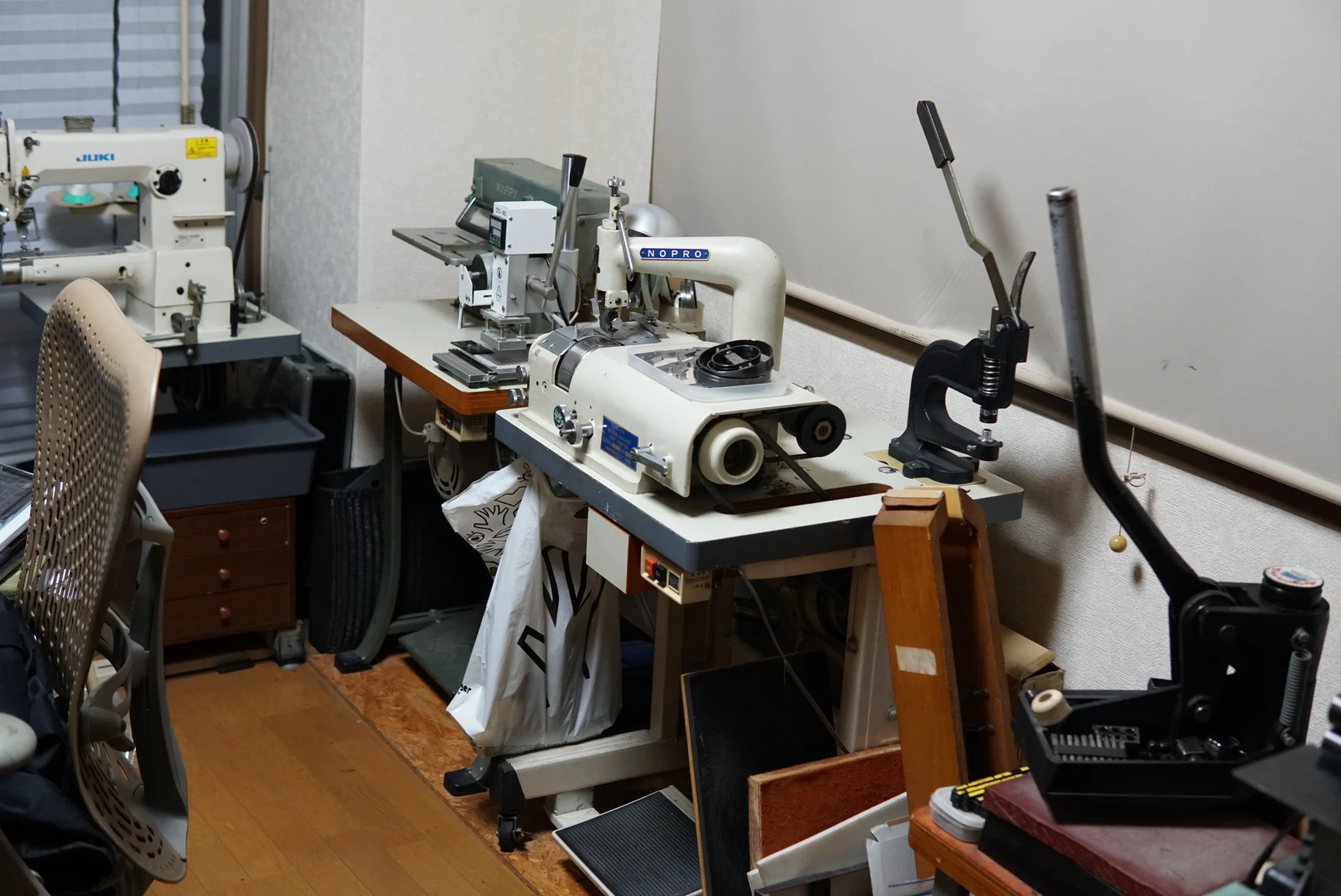
I left the company after ten years and used my retirement payment to buy a leather sewing machine and a leather skiving machine. Renting a shop and a home separately would have been expensive, so I looked for a place that could serve as both. I had no particular location in mind, but ended up near my former workplace.
I built the shop’s interior myself. That unfounded confidence was still with me, and I spent each day feeling excited.
About a month later, however, I realized that I had almost no products ready for people who did not know me to buy. My confidence began to fall apart.
Before making more things, I needed to change how I thought, from being an employee to being someone who made a living through their own business. That was how I felt, and I read all kinds of books.
As an employee, I could receive a salary by doing the work expected of me reasonably well. On my own, I had to live on the sales of products I made and people chose to buy. I felt the weight of what that required: what I needed to do, and the attitude I needed to bring to making products.
Designing for Years of Use
I was never naturally good with my hands. As a child building model kits, I often rushed toward the finished result and became careless along the way.
But once I decided to make a living from things people would buy, I felt strongly that I had to hold myself to a standard of workmanship that would give them no reason to complain.
When thinking about a product, I began imagining where it would be used and what would happen over time. I consider both appearance and durability, down to the choice of materials, stitching, and how parts are assembled.
The tote bags I sell today have removable handles. The handles, which are particularly susceptible to wear, can be replaced, and their color and length can be changed. I designed them so the bag could continue to be used even as the situations in which it was used changed.
A Craft That Grows with Time
To me, a lifelong occupation is one in which judgment and skill build up with experience.
I think of a sushi chef. When young, they might be appreciated for their energy and spirit. As they grow older, their work can gain the depth of long practice. That was the kind of occupation I wanted.
More than twenty years have passed since I began in 2003. Many things have happened, and the scale of the business has changed. My belief that there is meaning in continuing has remained.
Thinking of an idea, making a prototype, making the product, and selling it. I have done all of it myself, from the beginning through to today.
FROM CRAFT TO SOUND
DUB, to me, is resonance.
Across the many kinds of club music I listen to, it is the way sound rings and resonates that draws me in. The desire to express my ideal sound led me to DUB it ALL.
DUB it ALL ↗